Story of passion and success…
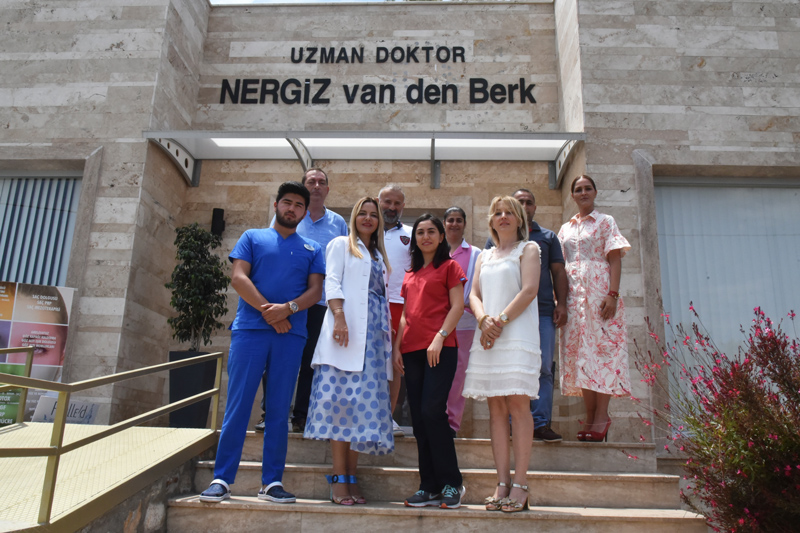
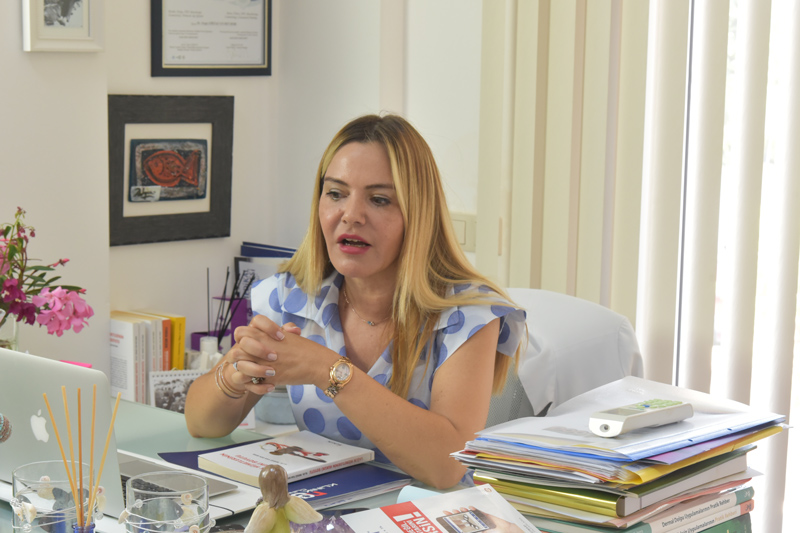
"My daughter, Derin is my life purpose; my patients are my source of motivation.” This sentence we heard, when we had a chat with her in her clinic in Yalikavak, summarises the secret behind the success of the young doctor...
She was the one who used to give the most popular answer to the question, “What do you want to be when you grow up?” She got down to the medical world while injecting her dolls in her tiny dreams... 6 years of medical training, specialisation and then a never-ending student life... As she does not give up on her dreams, she highlights her career with success and many firsts…
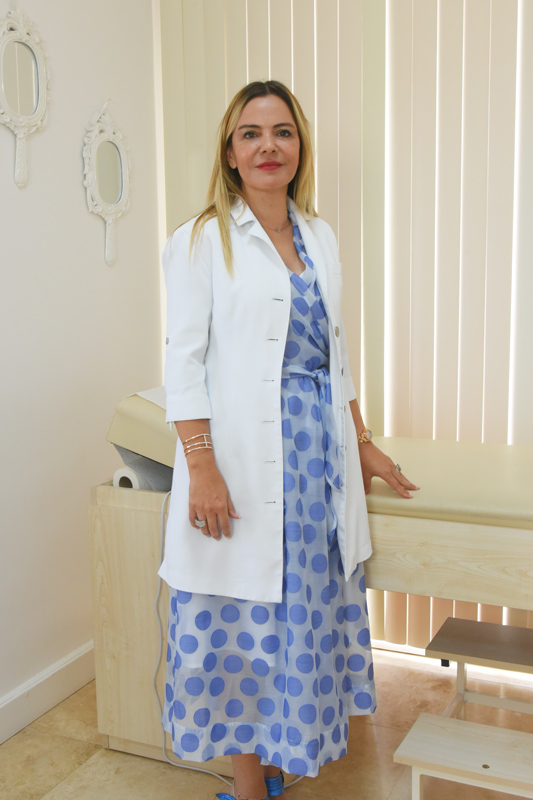
Who is Nergiz Van Den Berk? Would you talk about your career?
I graduated from Ege University Faculty of Medicine. When I graduated, I had a bunch of question marks over my head. Medicine is divided into specialisations; such as dermatology, coetaneous disorders, orthopaedics, muscle and joint diseases, infections or pulmonology (chest diseases). The human body is an organism and a whole. When you separate it and are only engaged with a separated part, you miss the system; some diseases, in fact. At a time, when I needed to decide my field of specialisation, it was a very big coincidence that the American Dr. John Fowler founded the Department of Emergency Medicine at Dokuz Eylul University, Faculty of Medicine. I became the first Emergency Medical Specialist, who had trained in the U.S. on behalf of the Ministry of Health of Turkey.
A symptom or problem can be caused by many different reasons. For instance, the cause of the pimples on your face can be an intestinal disorder. I learned more systematic approach to this subject with the Emergency Medicine. The patient comes up with a stomach ache; the symptoms can be a heart attack, chest pain or depression. It takes a systematic approach to diagnose quickly and find out the reason behind it. For this reason, emergency medicine was my first choice.
After mastering the human body and being adapted to diagnoses from symptoms; as a result of my education, I began to question the current system. A standard algorithm is taught to you and the patient is diagnosed in this direction. MRI (magnetic resonance imaging) scans, tomography scans... After diagnosis, a medicine is prescribed and all is done. Most of the time, the medication does not treat the illness, increases the quality of life for a short time and can cause a different disturbance in this process. The main thing is to find out the cause of the disease and to solve the problem. For this reason, I concentrated on preventive medicine and anti-aging. At Tilburg and Nijmegen Universities of the Netherlands, I worked in this field for about 7 years. In 2010, a study that I had conducted on rabbits about the protective and therapeutic effects of the maternal hormone took first place by an organisation that publishes international publications and articles. I decided to return home in the year when I received an offer to be the head of the department from the university. I was assigned to Izmir Ataturk Training and Research Hospital by the Ministry of Health.
I became the first Turkish doctor to be trained in and to have a diploma from the Royal Academy of London for the use of ultrasonography (USG) in skin, soft tissue and muscles.
For 3 years, I have been providing health services in Bodrum under the umbrella of Ng Clinic.
Could you describe your treatments, works and training you provide for anti-aging?
Today, anti-aging studies are very advanced. We can say that we will not grow old or it will take longer for us to age. Of course, it is important to approach the patients individually. Each individual has a body, which is unique. It is of great importance to make all the mental and physical analyses, which may vary as your way of nutrition in the womb of your mother, your birth, the foods you consume, the milk you suckled, the development of your intestinal flora, the stress you have experienced and then choose the most appropriate treatment approach.
Very interesting results have been achieved in studies carried out around the world. Breast milk is extremely useful for babies as it provides much calcium and protein which is required. In addition, the sugar molecule called oligosaccharide is present in the mother's milk and research shows that this molecule nourishes a bacterium, a microorganism, in the intestine of the baby. The intestinal flora is so important that it develops a healthy life and defence mechanism of a baby.
Human cells actually encoded up to 150 years at anti-aging. However, the factors such as vital conditions, insomnia and stress, affect the integrity of the soul and the body. There is a study called telomere, which is actually a chromosome protein. By looking at the length of this protein, we can see how your life will last. There are also some other studies, which indicate how much we are able to extend it.
Mental health is also very effective in anti-aging. A positive mind, a stress-free life and being happy are the most important details that extend telomere. I always say to my patients to look for nutrients, not foods. Today the most important issue we need to fight against anti-aging is nutrition. In particular, I focus on food intolerance tests in my studies. I see fruit intolerance in most of my patients and a problem of digestion. Because we consume fructose-laden fruits, we tire the gallbladder and the liver. For this reason, the most important element in anti-aging is natural nutrition, physical activity and a good spiritual structure. There are very good analyses now. Micronutrients, macrobiotics... That means; let us assume that your body needs 375 milligrams of calcium, however you see that the calcium, which is marketed is 500 milligrams. Not according to our minds, we provide vitamins, minerals, hormone supplements according to the cellular needs of our body.
What kind of health care services are offered at your clinic? Can you tell us about your working system with your patients during treatments?
The first contact is very significant. It is important to understand the patient, his/her past, future and their mental state. The form that is required for your file is filled in. You have a tour of our clinic. A doctor-patient relationship begins after seeing what happened. First, skin analysis and necessary blood tests are done. What the patient wants is also important. For instance, some of our overweight patients ask for lifting their faces. However, it is required to decrease the fat ratio, lose weight before and then start the treatment. Our patients usually pay attention to those warnings.
We provide genetic tests, tests of nutritional intolerance, intestinal flora, candida, heavy metal, vitamins and mineral sorting services as well as anti-aging and immediate treatment in our clinic.
Of course, we also work on stem cells. For stem cells, an aliquot from behind the ear and blood is taken to a laboratory, which we work with, at Istanbul Technical University. Your cells, which completely rejuvenate you in 3-4 weeks, are being produced with your blood. When they reach about 20 million cells, we use them during your treatment by injecting in the tissues as purely therapeutic or for rejuvenation, scarring, surgical traces or acne scars. This is a laboratory approved by the Ministry of Health. The sample is stored for 4 years and after 4 years; these young cells are being used when we want to do stem cell work again.
Would you talk about your book called the "Legal Dimension of Health Services"?
In the years I studied at medical school if you wore a white coat while taking the elevator you were given priority. There was great respect. When I returned from the Netherlands, I noticed that the situation had changed a lot. With the patient rights in 1997, patients became able to say and do everything to physicians. There were no physician rights. Emergency services are the places where it is most experienced. I thought that I had to master the health legislation as there were incidences happening all the time. I did my doctorate in Health Legislation at Izmir University in order to explain my rights, duties, responsibilities and the responsibilities of the patients. The thesis titled, "Legal Problems of Emergency Health Services" of mine, became a substantial source while preparing the book.